

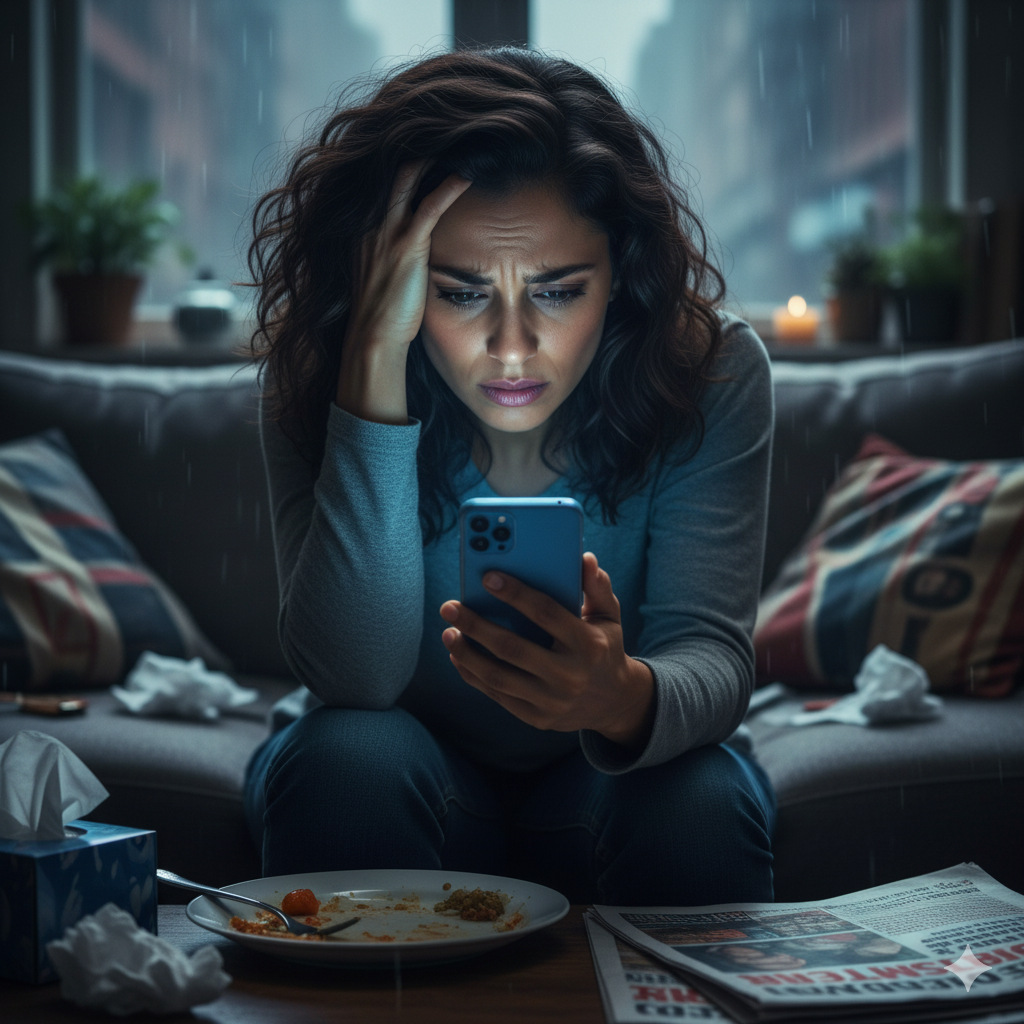
Navigating the Political Storm: Essential Strategies for Managing Political Stress and News Anxiety

Is the news causing anxiety? Learn how to manage it.

In today’s interconnected world, staying informed often means being immersed in a constant stream of political news. While civic engagement is vital, the relentless cycle of headlines, debates, and social media commentary can quickly become a significant source of political stress, heightened news anxiety, and emotional exhaustion.

At Jefferson Park Counseling, we frequently help clients who feel overwhelmed by the current political climate. It’s easy to get caught in a spiral of worry, anger, or despair. The good news is, you don’t have to completely disconnect to protect your mental well-being. By integrating intentional strategies rooted in mindfulness for news consumption and self-compassion, you can navigate the news cycle without sacrificing your inner peace.

Understanding the Roots of News Anxiety

Our brains are wired to detect threats, and political news often taps directly into this primal response. When we perceive threats to our values, community, or future, our “fight, flight, or freeze” response activates, intensifying news anxiety. This can manifest as:

  • Increased Anxiety: Constant worry about future political outcomes.
  • Irritability & Anger: Frustration with differing viewpoints or perceived injustices.
  • Feelings of Helplessness: A sense that you can’t change anything, a key contributor to political stress.
  • Sleep Disruption: Thoughts churning long after you’ve put down your phone.

Mindfulness for News Consumption: Practical Steps to Reduce Political Stress

Here are practical, mindfulness-based approaches to engage with political news in a way that truly supports your mental health:

1. Set Intentional Boundaries (The News Detox)

The first step in managing political stress is controlling the input.

  • Schedule Your Consumption: Instead of passively absorbing news throughout the day, designate specific, limited times (e.g., 15-30 minutes) for updates. When that time is up, the news is done.
  • Implement “News-Free Zones”: Commit to no news consumption during meals, before bed (at least one hour), or while spending quality time with loved ones.
  • Consider a “News Fast”: Take a full day or a weekend completely off from political content. Notice the impact on your mood and energy—it’s often profoundly calming.

2. Curate Your Information Sources Mindfully

Reduce the noise and focus on quality to decrease news anxiety.

  • Choose Reputable Outlets: Focus on objective, fact-checked journalism rather than opinion pieces or highly sensationalized headlines designed to trigger your emotions.
  • Minimize Social Media Exposure: Social media algorithms prioritize engagement through polarizing content. Adjust your settings or severely limit your time on platforms that fuel your political stress.

3. Practice Self-Awareness While Consuming Political Content

This is the core of mindfulness for news consumption.

  • Body Check-In: As you read or watch, notice physical sensations. Is your jaw clenched? Shoulders tense? Heart racing? These are signals from your body that your anxiety is escalating.
  • Acknowledge Emotions: It’s okay to feel anger, sadness, or fear. Simply notice the emotion arising without getting swept away by it. Say to yourself, “I’m noticing a feeling of frustration,” and then gently redirect your attention to your breath.
  • Ask: Is This Serving My Well-being? Before clicking another link, ask if this information is truly informing a decision or action, or simply escalating your internal news anxiety.

4. Transform Helplessness into Balanced Action or Acceptance

  • Channel Your Energy Constructively: If a news story deeply concerns you, find a constructive outlet (e.g., volunteering, focused research, contacting representatives). Taking action is an antidote to feelings of helplessness.
  • Practice Radical Acceptance: Recognize that some situations are genuinely beyond your personal control. Managing political stress requires acknowledging reality as it is, which reduces the mental energy spent fighting unchangeable circumstances.

Find Support for Persistent Political Stress

Learning to navigate the complexities of our world while protecting your mental health is a journey. If you find yourself consistently overwhelmed, unable to sleep, or consumed by news anxiety, our compassionate therapists at Jefferson Park Counseling are here to help.

We offer effective, evidence-based strategies to help you develop stronger emotional regulation skills, establish healthy boundaries with media, and find a greater sense of peace amidst life’s challenges.

Don’t let the headlines dictate your well-being. Take the first mindful step today.


Ready to reduce your political stress and build resilience against news anxiety? Contact us for a confidential consultation to explore how therapy and mindfulness can support you.

Info@JeffersonParkCounseling.com JeffersonParkCounseling.com
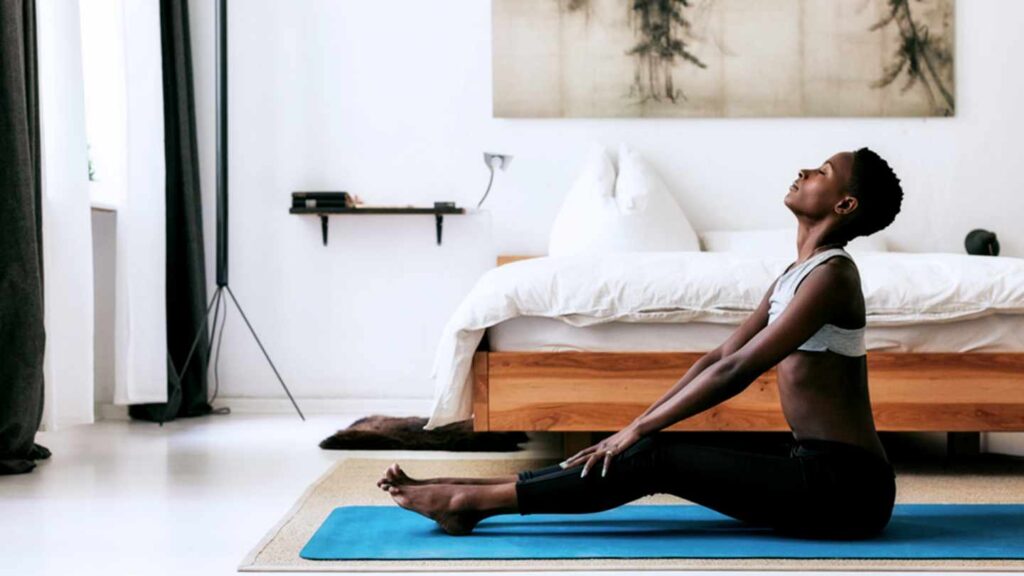
The power of breath: How deep breathing reduces anxiety

Anxiety is a physiological symptom as much as it is psychological. All meditations start and end with taking a deep mindful breath. Studies have demonstrated that a deep breath can reduce stress and improve mood. Why is something so simple so effective? Looking first at how anxiety works will help illustrate.

Anxiety starts in the brain, in the amygdala.  Nicknamed the “fear center,” the amygdala’s job is to warn of any danger, real or perceived.  This part of our brain existed long before we developed our ability to reason, and served us well in times where our ancestors had to fear danger from predators at every moment.  Since then, the world has changed and it is a rare situation where we find ourselves in true danger.  Nevertheless our amygdala is still there, still warning of danger.

Think of when someone comes up from behind and spooks us.  Boom! We feel a full body jolt of adrenaline. It is a full body sensation, causing restricted or shortened breathing, tightening of our muscles, and increases in our heart rate. The brain is shouting, “DANGER!” All of this would be helpful if we had to evade a bear attack, but when it occurs prior to giving a speech in front of a large crowd, it is not so helpful.

Breathing is a way to calm both the brain and body and counteract the symptoms of stress and anxiety. A deep, full bodied breath signals the parasympathetic system, the part that is calming and relaxing. A deep breath slows your heart rate and relaxes the muscles in your body. It also provides a moment to stop any intrusive thoughts from cascading.

Deep breathing is such ubiquitous advice that it is easy to lose perspective of how powerful and efficient it is. It is always available, and does not require privacy or space. Sometimes the simple advice is the most effective. Try some deep breathing exercises and have them ready to use the next time you feel stressed or anxious.

How To Deal With Anxiety

Anxiety

Anxiety can be one of the most crippling and paralyzing emotions we can experience.  It can devastate us, and restrict us from enjoying our lives.  Anxiety can drive a wedge in relationships and adversely affect our careers. It is extremely common with the Millennial generation, so much so that it is being called a silent epidemic.  Anxiety is becoming so widespread that there is not much stigma in admitting that you experience anxiety attacks or suffer from insomnia.  Anxiety can go overlooked and untreated, and like any other issue, it will only get worse.  Unaddressed anxiety can lead to stomach pain, headaches, back pain, and insomnia.  

Worse yet, anxiety can make us feel alone and hopeless.  Relief can seem impossible and out of reach.  Our own personal attempts to handle it often seem fruitless or unsuccessful.  So what to do?  Hundreds of studies have empirically proven that cognitive behavioral therapy can significantly reduce or eliminate symptoms of anxiety.  

Cognitive-Behavioral Therapy(CBT) starts with recognizing your anxious thoughts and readjusting your thoughts to cause a different emotion.  It starts with a very structured process that becomes ingrained until it is second nature.  Then therapy is terminated with no fear of backsliding to old habits.  CBT works by using relaxation techniques along with monitoring your thought processes.   There are many books available to learn more about this mode of therapy but it ultimately starts when you meet with a therapist.  Meeting in the office allows for an outside look at your thought processes and an opportunity to learn helpful techniques that are proven to reduce anxiety.  

Mindfulness is another popular modality for treating anxiety.  It has become very prevalent and has been featured in the news, apps, magazines and books.  The idea of quieting your mind and finding internal peace resonates with our fast paced society where we are constantly on, refreshing twitter for the latest news or checking for a work email.  Its no surprise that there is also a rise in sleep disorders when we have this cultural expectation to be completely alert and ready up until we try to fall asleep. Talk about trying to reverse course.

Intentionally slowing down and trying to gain awareness of our thoughts and feelings help puts us in the driver seat where we are then able to be intentional with our actions, and can choose to slow down and quiet our thoughts.  This approach favors balance and awareness, and while it seems passive it can yield great results.

The good news is that despite anxiety being so prevalent and widespread, qualified therapists are just as available.  The first step is to call and schedule an appointment.  Not only is that the quickest route to relief, it is also the only proven way.   We are ready when you are.

The Consequences Of Ignoring Our Emotions

Suppressing your emotions?


Have you ever noticed a headache or tense neck when you were having a bad day?

Just like stage fright can cause a stomach ache, any emotion can have a physical effect on you.  Emotions are very powerful, and we have a tendency to push away our feelings.  Our culture constantly tells us to put on a brave face and to act as if everything is fine.  A byproduct of that is that we are trained to swallow our feelings instead of dealing with them appropriately.  This leads to physical, or somatic, issues.

The physical effects of anxiety are easily observed.  First date jitters and test anxiety are some of the more minor issues, ones that are commonly seen and talked about.  But how about back pain?  Research has shown that back pain can be caused by prolonged stress and anxiety.  Migraine headaches?  Check.  High blood pressure? Absolutely.  How about gastrointestinal issues?  The surge in diagnosis of Celiac’s disease and IBS is in no way unrelated to an increase in anxiety and stress.  There are many cases of episodic IBS that are spurred by stress inducing events such as social gatherings.  Grinding teeth is a common manifestation of stress or anxiety, and it can lead to terrible headaches and expensive damage to our teeth.

In our quick fix society it is common to see people treating the symptom, whether it is pain pills or sleeping pills.  Instead, I challenge you to treat the source, which more times than not is unresolved anxiety.   The takeaway here is that the effects of anxiety isn’t limited to your feelings and thoughts.  It can have long lasting and expensive damage to your body.  People can continue to play whack a mole by treating the symptoms, or realize the cause of these ailments and seek brief therapy with long lasting effects.